Bye-Bye Gidsy!

The other day I, Touristologistly, tweeted this post

Jordi, exactly what do you mean with “DEU N’HI DORET” is this English? No, it is Catalan my beautiful mother tongue! It has a lot of translations but on this occasion it can be something similar to… what a surprise!!!
I also attached a video about one ad of the buyer, Get Your Guide.

I find this add interesting because it is an example of “how to increase the relationship with your customers” that we talked about here. At the end of the day, to introduce the members/workers of the company is a way to convey the idea that we are more a family than a company and, usually, you get more attached to people than companies!
I love the idea of Gidsy as I said here it was an excellent example of, at least three really important concepts for any Touristologist: Servuction, Pro-Am and Super3.
Furthermore, Gidsy was more focused on providing experiences for specialized segments than products for anyone… and you know my bias for specialized tourism.
I checked out the new website and it seems very similar. I will keep an eye on it. It still seems like a very good example for my classes and seminars!
Anyway, this acquisition (more information here) is a wake-up call for all startups. If your business is very original BUT generic, sooner or later a bigger competitor or a member of the chain of value will try to buy you. It’s the next logical step. Generic tourism is based on economy of scales. So, the bigger fish eats the smaller one. There’s nothing wrong with that, but you have to be aware. I talked about this here remembering the cases of room 77 and worldmate and foreseeing something similar to WeHostels.
On the other hand, if you aim at specialized tourism with an international scope, the possibilities to start and endure is multiplied by 1000. Of course, you will have a small number of potential customers, BUT you have a greater potential of growth and chain of value control, as we explained here. In specialized Tourism the winner is the one which gets the trust of the customer by adding value NOT by lowering the price. This value can come from:
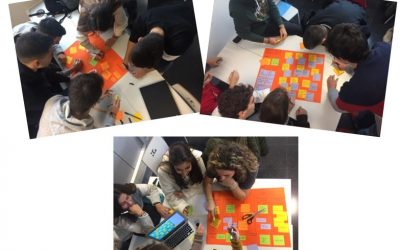
1) Synergies between people that like the activity, pro-am and professionals. Touristologists represent this fact with the following matrix.
2) International routes. You will have customers from around the world and you must offer products with the same scope
3) The possibility of becoming a Super 3. Take the case in point of Wyndham for instance. They developed a customized service for Business Women (a good example of My Own 1,2,3). Then, they create a central reservation system for any hotel desiring to serve this segment. This is the power from getting the trust of the segment!
I repeat, you can choose generic or specialized. It’s up to you! Just remember, they are a different kind of business with both pros and cons that you have to be aware of …. Of course, only if you want to become… A TOURISTOLOGIST!!!

Formada, mundial, emprenedora i enfocada al sector turístic=Èxit

Article a Comunicatur

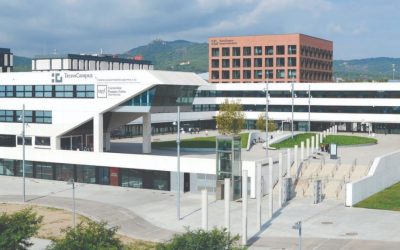
En el Tecnocampus de Mataró es troben espais de creativitat i innovació aplicats al turisme. Estudiants amb un Business pla i recolzats per Emprendetur —la línia de préstecs tous que gestiona Segittur per a joves emprenedors i empreses innovadores—, indiquen que alguna cosa està canviant en el sector turístic.

És el cas de Sara i els seus dos socis, també estudiants, que han desenvolupat un programari, Prometteo, mitjançant el qual les persones amb discapacitat auditiva trenquen amb les barreres comunicatives i poden gaudir d’un viatge independent i autònom. Com Sara, uns altres molts emprenedor@s estan cimentant el futur del turisme.

El sector, orientat al món per naturalesa, està suportant la crisi millor que cap. En 2012 van arribar gairebé 58 milions de turistes internacionals, amb un creixement del 2,7 per cent respecte a l’any 2011. Així mateix, es va produir un increment en la despesa total dels turistes internacionals del 5,7%. Tot això va fer que l’Organització Mundial de Turisme (OMT) hagi destacat que el balanç turístic d’Espanya és el “millor del món”, amb un saldo per turisme xifrat en 28.623,4 milions d’euros fins a octubre.

No obstant això, no tot és de color de roses en el sector. En 2012, l’índex de la xifra de negoci de les agències de viatges i operadors turístics va caure un 8,2% i l’ingrés per habitació disponible va caure un 0,6% als hotels espanyols. El 2013 no ha començat bé en l’estadística de viatgers. Els casos de corrupció no ajuden a la imatge de la marca i correm el risc de convertir-nos en una destinació barata com hem vist que ens considera el turista del Regne Unit.

En aquest escenari el sector és conscient que té la necessitat de generar activitats amb major valor afegit. Obrir-se mercats (BRICS? Àfrica?), intensificar l’aposta per una varietat de productes (Salut? Shopping? Experiencial? Gastronòmic?) i segments (jove? sènior? gai?). Interactuar més amb el client, segmentar la informació i, no obstant això, maximitzar l’impacte. Tourespaña té un portal informatiu (Spain.info), una pàgina de Facebook, un compte en Twitter i el portal Ineedspain.com, que inclou continguts generats per usuaris (Spain Addicts). Té moltíssims seguidors, però ara necessita fidelitzar-los.

Per tot això és necessari un professional ben format, modern, digital, viral, social, híper connectat, gestor, analista, innovador, emprenedor i molt creatiu donada l’absència de recursos. I no és aquesta la característica del treballador del sector. El propi Secretari d’Universitats va lamentar fa poc més d’un any la poca adequació entre demanda del mercat de treball i l’oferta formativa. Ja no són notícia les enquestes que mostren falta de coneixements de gestió en els nostres professionals, d’idiomes, de formació online, resolució de problemes i innovació. I després estan, totes les habilitats que ells no detecten (moltes d’elles ja esmentades). I és normal perquè el percentatge de treballadors amb estudis superiors en el sector turístic (24,6%) és 13 punts inferior a la mitjana de l’economia espanyola (37,9%). Les dades són molt poderoses.

La culpa està repartida. La societat no ha posat en valor els estudis de turisme. Els estudis universitaris de turisme han estat molts anys (alguns ho segueixen estant) en versió “Beta”. Com és possible que Espanya no sigui una de les grans potències en formació i recerca en matèria de turisme? Els grans i tradicionals dominadors del sector van ser emprenedors en el seu moment, però amb un escàs grau de formació. Com és possible que no sorgeixin més emprenedors com Amusement Logic, SeetGeek o… Prometteo? Doncs perquè no hi havia l’entorn adequat.

S’imaginen uns estudis de turisme amb la dosi adequada de management, moderna i degudament aplicada al sector del turisme i el lleure? S’imaginen que estigui situada en un entorn emprenedor i innovador? Amb nous emprenedors a pocs metres?Amb “laboratoris de la innovació” com a aules? S’imaginen que comparteixin Campus amb estudiants de Màrqueting orientats a les Comunitats Digitals i amb estudiants de ADE orientats a la Innovació i la emprenedoria? S’imaginen rebre docència per professors amb aquest tipus d’inquietuds, formació i experiència? S’imaginen que algunes de les seves classes segueixin la nova tendència del MOOC (Massive Online Open Courses) on es comparteix i difon el coneixement de classe en forma de vídeos o debats de forma global? Com ho fa Stanford, Harvard o el MIT? Imagine… it’s easy if you try.

Com hem vist al principi de l’article, aquest entorn existeix. I no només això, sinó que comença a donar els seus fruits. El mercat ja s’ha adonat de la fórmula de l’èxit: formació+internacionalització+emprenedor+sector turístic. Sara aprofita el seu temps avançant en el seu Business pla. En les classes de Màrqueting de la “Doble” (que és com a anomena al Doble Grau ADE-Turisme que realitza) coneix noves estratègies per promocionar el seu producte, idees innovadores que aplicar i contactes on presentar el projecte. Sara té molt clar que el món és el seu mercat i el sector espera molt d’emprenedors com ella. Would you be on top of the World?

Dr. Josep Maria Raya
Coordinador del Grau en Turisme i Gestió de l’Oci i el doble títol Turisme-ADE
Tecnocampus Mataró-Maresme (Universitat Pompeu Fabra)
jmraya@tecnocampus.cat
www.econ.upf.edu/~raya
Twitter: @Joserayav
http://blocs.tecnocampus.cat/el-bloc-de-turisme/


From shut up we don’t want to code to please can you teach us!

I remember when, a long time ago, I began to mix Touristology with Web-engineering. It was 1996, I was taking the courses for my Phd and everybody was talking about the Internet, it was the flavor of the month! Very soon I realized that in order to be successful you have to develop two mindsets, the business model internet orientated and the technological schemes. I read like crazy “Business2.0” to learn the first and Deitel books series about “how to program..” to get the second.
I had a strong desire to share this knowledge with my Touristologists, BUT… Well, they strongly disagree! Why do we have to learn programming? This is a Tourism grade NOT an engineering one. Because – I always try to explain- information and tourism are strongly related and I know that there are a lot failures in our field caused by engineer’s lack of knowledge of Touristology and the other way around.
Even though you don’t want to program all the code needed, you have to learn enough to be able to create a team, to be the leader in the implementation of the business model. You only can do that if you know both the technological scheme and the business model. Does this picture by Escher ring a bell?

Then you can decide to be a leader of coders from here (select your country, Touristologist!) or choose to be a leader of an offshore team. At the end of the day, we are Touristologists. To us getting international contacts and doing business around the world is the natural thing! Let’s put our Touristology knowledge to work in order to get good code and implement our business model!
I repeat over and over these ideas in my classes, in seminars, in meetings with my Touristologists where we dream about creating a startup and change/improve the tourism sector. Anyway, it was always difficult to seed my desire in the minds of my Touristologists!
Not any more, Touristologists! Nowadays I get e-mails, facebook messages, tweets from My Touristologists asking me “Jordi, do you know of any websites, books, articles that make it easy to learn how to program” Well, there isn’t such a thing! Learning how to program is not easy BUT definitely worth it!
It’s difficult to learn the basics. Where to store data (in variables, in arrays, hash table… ), how to walk through these recipients using if-elses, whiles, for…, how to create functions in order not to repeat yourself, how to use classes and open the universe of OOP (Object Oriented Programming), how to get and put information in a text field, in a Relational Data base or in a NoSQL one, how to practice syndication getting and sending the 3C’s through internet using webservices or webscraping, how to create a good GUI (Graphical User Interface) in order to convince customers, collaborators and employees that this is a great application, how to adapt this GUI to a multiplatform world (PC, Laptops, tablets, smartphones, television screens, glasses…

Be aware, Touristologists, when you learn the basics you are in the beginning of your race (remember, learning how to program or doing a project is not a 100 m race it’s a marathon!) now you have to master your abilities with a good mentor and a lot of practice.
At the end of the day, programming is like any other science, take Touristology for instance! First you have to learn the basics, and then through good mentors and a lot of practice you will become a great Touristologist.
Remember, to mark down your prices with low demand, mark them up with strong demand, rely on big intermediaries as a big tour-operator, the new search engine, the new SnS or the new group buying and flash sales sites… THIS is not Touristology!!! You have to learn the basics, 1,2,3 theory, strategic triangle, Bermuda triangle, Homus Organizativus….. and then make the definition of Touristology happen…
“Touristology is the art and science of travel motivation promising improvements in quality of life, international contacts and broader perspectives for the tourist AND a way to take care of culture and create richness and employment for the tourist destination.”
So, now you want to learn both Touristology and Web-engineering? I will be here waiting for you ! I have ALMOST the same desire to share my knowledge as 21 years ago… it isn’t the same now…It’s MORE!!!
My desire to teach is multiplied by 1000 when I smell your desire for learning!
So, I’m ready! What about you?!?!

Revenue Management Study Case

I promise my Touristologists to bring/give to this blog a couple of study cases in order to practice Revenue Management Framework. The other day I gave the first but I promised two. Do you want the second? Here you have it!

As I said in the first one…Feel free to reply the following questions as a comment to this post or send my an e-mail (you can use the one that appears in “About Me” ( skynetengineering@yahoo.com) I will love to reply to your proposals!

In this occasion we have a hotel that is very famous for its home-made desserts that every day it offers to their customers.

One month ago they finished a native application available for the most important operating systems (I know that you know them!). They invested a good amount of money in the design but they are not getting the big results that they were expecting.

A Touristologist was passing by and the revenue manager asks him/her for some advice in order to improve the situation.

I understand that you are following Web 2.0 business model …. you know, the matrix talking about  the three C’s  content, commerce, community and how to deliver them in a customized, syndicated and pro-amized way and Web 3.0 framework (providing Interaction from the beginning to the end of the trip) – The Touristologist replied.

Hmmm, I am sure that the first time I saw this matrix there weren’t these green marks- thought the Revenue Manager- I don’t know maybe it’s a clue.

Can you use the web 2.0 business model and the Web 3.0? Can you use interaction of all the departments as I recommended in this post?

Maybe this video will help you to connect the dots… By the way, it’s also a good example of versions of ME!


Please, give your answer using the short vision of a Revenue Manager…

I love Touristology’s games! What about you?

Damn it, I’m a Touristologist!!!

On Sundays I like to meet with a crowd of programmers and pretend to be one of them. I copy their lingo, I do my best using their tools, I try to understand, use and make their framework mine.

Sometimes, we meet in public libraries. Absolutely my fault! I love books, I love public spaces….

So, Here I was one Sunday with a different mindset (Cloud computing/Portals/ WebScraping /Tablets-smartphones/ NoSql…..) waiting for the wake up of my virtual environment. When my eyes glance at a book with an attention-grabbing title “The constant art of being a writer” I was browsing through its pages when out of the blue… the author talks about the importance of a strong will and the need to recharge your energy if you want to be a writer.

She said that idea in this way… “….So you feel like giving up” THEN… “Revive your creative energy with an exotic residency in a place you’ve always been interested in like Spain”

My mind becomes a blackboard… a segment with specific needs (amateur writers willing to travel in order to get an extra boost of creativity). This is number one!

Go to Spain? Find a place where it will be easy to isolate, to concentrate into your work and to get spiritual energy? Where you can learn to eat and cook the best food and beverages for intellectuals warriors? Where you can get the opportunity to meet and share experiences with other literature lovers? This is number 2!

We need to use or build a chain of value, to get the trust of the tourist and add value, to provide support for the tourist from the beginning to the end of the trip. This is number 3!

Meeting places for the segment? What about Universities giving seminars about how to become a writer? Can you give examples for specific countries?

Outgoing travel agencies? I think literary traveler can be an interesting option. Also vocation vacation where people will try their vocation through a vacation! Can you give examples for specific countries?

Reading this sentence and beginning to create the 1,2,3, theory is something automatic to me! Damn it, I’m a Touristologist!!!!

Literary travel is one of the great opportunities for travel motivation. Who doesn’t like after reading a good book to have the opportunity to see the scenarios, to talk with people from this culture, to have the opportunity to talk with the author, to go to a university, to an educational center…Nowadays, there are plenty of ways to attend university courses, to expand your mind… some of them for free. Does MOOC ring a bell? or Khan academy OR Gidsy where experts sell their expertise as we explained here.

But Jordi!!! You are an old chap! I know that you pretend to be forever young learning new tricks, BUT… books? This is old media! OK Touristolgists don’t talk about books (even though I think that some of you STILL read books with e-readers and tablets) what about movies, television series?

You know Touristologists, there are things that never change, the desire to learn, to feel emotions, to live others’ lives… and you can get this through a book, a movie, or a storyteller! After that, there is another thing that never changes and never will… The desire to go to these places! Here is where we, as a Touristologists, appear! Remember our definition of Touristology! “Touristology is the art and science of travel motivation promising improvements in quality of life, international contacts and broader perspectives for the tourist AND a way to take care of culture and create richness and employment for the tourist destination.”…

Jordi! Is the code ready? We are waiting!

Yes, yes sure…

You know sometimes you seem to be lost in another world.

Yes, Touristology’s world, my friends!

Damn it! Even on Sundays, even with another mindset …I read a book and …. Automatically I began to imagine segment needs, service suppliers and a chain of value (1,2,3, theory!) Damn it, I’m a Touristologist and….

VERY PROUD OF BEING ONE…. ARE YOU?

The making of a Touristologist builder.

Previously in this blog, I Touristologistly declare to be a Touristologist builder. I have been a lecturer in tourism for 21 years. I neither teach the same course 21 times nor use the same methodology. Both the concepts and the methodology improve/ evolve after each class, seminar, in-company training or conference.

A long time ago, I understood that it is not about lecturer’s knowledge (of course, it is important that you master your topic, but this is a prerequisite) the real thing is that at the end of your job your seed the desire to learn AND a framework to get new information, process it and make the right decisions.

As some of my Touristologists from Portugal say…

At the beginning of my path to become a Touristologist builder I had the opportunity to travel to Peru and improve my skills as a speaker and consultant.  It was a great experience! The only inconvenience was that the trip was in the middle of a course… when I returned I thought that in 5 days I could do the same as in 10 and I did it. I finished the syllabus BUT a little voice was telling me all the time “You explain everything BUT are you sure that they understand, that they get the framework, customize it and create their own one?”  That year I learned that the good part in the educational process is when I stop talking and begin listening.

When my Touristologists take control of the class, prepare a presentation and become leaders of the class is when I can see the strong points, their weaknesses, their misconceptions…  I begin to sculpt the Touristologist inside each one of my students. Sometimes we end up with a regular Touristologist (always my fault!) sometimes with a masterpiece (always thanks to good raw material!!)

I do that in my classes but also when I do in-company training and try to transform isolated departments focused on their task to a perfectly greased machine coordinated with the whole enterprise OR Isolated enterprises into a fully integrated chain of value: A nimble, agile system able to get the trust and add value to the customer.

As I always say “We have to achieve that all departments work  as a single organization and our chains of value working as a single enterprise” This is not easy, but it is what XXI’s century tourism is demanding in order to create communicate and commercialize, fast and customized tourism services.

So, what is the beginning of the process, the bedrock of these kinds of entities?

Without any doubt… PEOPLE! Beginning with tourists. It is not enough to create customer orientated organizations. We have to transform our clients into our collaborators. At the end of the day, it is not MY enterprise or MY tourism destination anymore. It has to be OUR company or tourism destination.

Are you worried about your on-line reputation? Do you want to give positive comments about your enterprise? Do you think about giving negative comments about your competitors? I strongly recommend not doing it! First because I ‘m sure you have better things to do (look for new segments, build and manage chain of value….). Second, because I believe that these kinds of actions create a bad energy around you ( you are in the service business, you have to smile and be  good with people and convey good feelings). Third, because it is possible that the web discovers your actions and it usually doesn’t forgive this kind of behavior.

Is it not much better to convince, to engage your customers to make positive comments related to your business?

Is it not much better to convince, to engage your customer to gently reply bad comments and try to convince others to change their minds related to your business?

Do you want to know what kinds of services are valued the most by your customers? What kind of activities they desire? Let them make proposals of products! Let them communicate and commercialize these products (Here we have an example related to KLM, that I commented about in another post).

In order to do that, you have to transform your customer into a kind of Touristologist. You have to do the same with your collaborators and your employees. So, do you want a better company? Educate, train, your customers, collaborators and employees. As I always said “Help them to help you”

You can achieve this goal through a teaching specialty named in-company training or seminar. A seminar or an in-company training is far different from a regular course. In the second one I know from the beginning what I have /need to teach. In an in-company training, on the other hand, I put all the knowledge (related to the topic, of course) in front of the assistants and then WE pick up the best tools and mental schemes, taking into consideration their lack of experience or interest. As I said right at the beginning “This is not MY class, this is OUR class” It could not be any other way. Am I not repeating over and over that we have to convince our customer that it is not MY enterprise but OURS? Why would the education process be different?

The other day my five year old son was crying. He was afraid of dying. I’m telling you what I told him (of course after big hugs and tender kisses!!!)…

Don’t be afraid of dying… Be afraid of dying without finding yourself first, without learning your role in this crazy world and accomplish it! Then you will die in peace with a smile in your face…

I’m a Touristologist builder. I have been helping to create hundreds of Touristologists. They’re spreading like a plague into the tourism sector around the world, changing the way we enjoy, manage and define Tourism. They are Touristologists AND Touristology is OUR science!

I still want to be a Touristologist! What about you?

This week, twenty one years ago… I taught my first class in Touristology. I soon realize that my students in their last year knew more about tourism than myself. I put all my energy and effort to change that! I learn from my students (I still do!), I learn from other teachers, I become a regular in the library, I talk with any professional related with Tourism… The more I learn the more I wanted to become a Touristologist! I knew that the best way to learn something is to teach it. So, I got voluntary to teach any subject: Financial Maths, Business Administration, Statistics, Technology, Economy, Entrepreneurship… anything BUT with always ending up “TO TOURISM”. Some people make fun of me and call me the firefighter teacher… Anyway, after two years I was absolutely in love with Touristology. When I decided to do my PhD. I chose as a topic … Touristology, what else!!!

My kids enjoy writing a letter to the Three Wizard Kings AND … so do I! I only ask for three things (one for each Wizard!).
“Gods, grant me the serenity to accept the things I cannot change, Courage to change the things I can, And wisdom to know the difference.”
Serenity, Courage and Wisdom… those are real gifts!
I hope they help me to:
1) Focus on do great things, as Steve Jobs said “Being the richest man in the cemetery doesn’t matter to me … Going to bed at night saying we’ve done something wonderful… that’s what matters to me.”
2) Surrounded myself with young people hungry of doing these great things. Then create a startup with them using both a business model and a technological scheme. We will need people working with the first (business model) here My Touristologists are a fast, lean killing machine perfectly suited for this job! What about the second (technological scheme)? Any of My Touristologists is able to communicate with a technician; many of them are able to create the basic technological skeleton BUT we need a team of people able to focus on the Web-Engineering side, the kind of people more happier talking binary code than English, not so excited when two human begins or organizations make a deal but when the data base (SQL or NoSQL) finally is dealing with the server, the laptop or the Smartphone. If you are one of these people, or if you know them… Maybe we can do big things together!!!
3) Pay minimum attention to mediocrity and envious people. Yes, you have to deal with them BUT never pay extra attention. All your mind, energy, generosity… are for the great things and for the people that help you to achieve them.
Some people believe that 2013 will be a bad year, I don’t believe in bad years. My happiness, my passion, my vocation is from within. I’m not immune to external events it is just that I have been in worse places and circumstances and there is an eternal truth: whoever resists wins!
I still want to be a Touristologist! What about you?
I still want to revolutionize our lovely sector! What about you?
I still want to make clear than Touristology is a science! What about you?

THE BEST IS YET TO COME!!!

Jordi Oller

joller@tecnocampus.cat

http://turistoleg.blogspot.com

twitter.com/Turistoleg

Homage to My Touristologists!

The other day I was asking for another successful Touristologist in order to win the battle against mental limitations… if I had known that if was just necessary to ask for it…  I would have done it before!!! Just after writing my post appears a good bunch of so-near-to-get-the-grade-that-you-can-call-them-already-Touristologists showing their projects, their ideas for creating and managing tourism enterprises.

It’s so good, so nice, so intellectually refreshing to see their faces, their eyes shining with desire for success that when they ask “Jordi can you help me? I always reply “I always have time for my Touristologists!!!”

One of them (I avoid to use his real name, they always can make a comment in this post if they desire to share their identity!!! I will use the neutral gender as well, but don’t confusion here… women Touristologist are at least as good as their male counterpart!) is dealing with an enterprise that want to motivate/ improve/ revolutionize travel for deaf people. “It’s a huge segment. 70 million worldwide” She/He claims. She/He had just won an important prize from one of my favorite events: startup weekends . Now, She/He has to move from a good idea and good business plan to a real enterprise. It’s a long road, plenty of challenges, difficult but far away from impossible… especially for one of my Touristologists!!!

Another is making the expansion of a virtual community, magazine and a travel agency focusing on tourism and golf “I want to do it globally, of course. The world is my office” She/He  Touristologistly claims.

I love seeing my Touristologists becoming professionals, it can be as entrepreneurs (like the previous ones) or as international warriors… like the Touristologist who wants to work in the MICE industry his passion, his hunger for success are difficult to match! Or the one willing to work in different hotels around the world “I want to get international perspective. I know that a good hotel manager has to deal with multiculturality and nothing better than work with international customers and international coworkers!”

As you know, I like interaction in the educational process I like to present/introduce a study case to my Touristologists and do it together. Sometimes it is like a pregnancy with strong emotions and arguments involved (my Touristologists have a strong personality and… So do I!) but at the end of the subject we deliver a beautiful baby, I mean… project!

Jordi! Maybe you can use a methodology which means less work for us and for you! Sure I could! BUT with this kind of interaction I’m sure that my Touristologists don’t learn the subject by the book. I want them to become master and commander of Touristology’s Framework. In order to achieve that nothing better than trial and error methodology!

It requires a lot of work, stress management skills, to develop a strong will and to learn how to work as a team, but this is what is needed to becoming a Touristologist!!!

This year I have been lucky enough to have the opportunity to be a teacher to very good Touristologists. Great news for the future of Touristology!

There are a lot of feelings that their actions/dreams/willingness to win provoke in me, but… in a nutshell…. thanks for being Touristologists!!!

I’m absolutely sure that they will be successful. I made a promise to them… today is 01/12/2012. In five years time I will talk again about them. I’m sure that they will fulfill their destiny. As sure as Touristology is a science!!!

And then it won’t matter what your parents said, neither your teacher’s opinion nor the favor of the leaders of your community…

Show me your desire, your passion.

Show me your plan of action.

Show me your discipline to stick with your decision…

and  I can promise… you  will achieve your mission!

Cuenta Satélite de Turismo

La CST fue aprobada en el año 2000 después de diecisiete años de estudio y preparación en la que participaron organismos tan importantes como la OMT, OCDE, Eurostat y WTTC (Consejo Mundial de Turismo), bajo al dirección y supervisión de la ONU. En ella se incluyen sectores que van más allá de los considerados genuinamente turísticos (hoteles, AA.VV. etc.), por lo que se tiene en cuenta la participación de todos aquellos que contribuyen al beneficio económico que aporta el turismo: el valor de los alimentos que aporta el sector agrícola para consumo de los turistas, el de los edificios construidos para uso turístico etc. Así pues, esta cuenta supone una aproximación muy cierta al valor real de la actividad turística.

Para elaborar la CST se toman datos de la Contabilidad Nacional pero aquélla no altera ni sustituye a ésta. Algunas de las fuentes de donde toma los datos la CST son estos:

-          Egatur. (Encuesta del gasto turístico en España).

-          Encuesta de ocupación en alojamientos turísticos que confecciona mensualmente el INE.

-          Frontur. (Estadísticas de los movimientos turísticos en fronteras).

-          Familtur. (Estadísticas de los movimientos turísticos de los residentes en España).

España ha sido uno de los primeros países en poner en práctica el nuevo sistema, y se ha podido comprobar que aporta mejoras dando una mayor fiabilidad a los resultados, sobre todo en lo que concierne a los epígrafes siguientes:

La participación del turismo en el PIB. En España alcanzó casi el 12’4% en el año 2001. El PIB es el valor total de la producción de bienes y servicios que se genera en un país sin importar de donde procede el capital.

La dimensión de las empresas turísticas en relación con otros sectores. La principal característica del sector turístico español es su atomización. No obstante la globalización económica ha impulsado a muchos de nuestros empresarios a iniciar procesos de concentración empresarial. Estos son más importantes en el subsector del alojamiento que en el de la intermediación. Los grandes grupos turísticos se forman agrupando a empresas que están situadas en distintos niveles del canal de distribución: hoteles, tour operadores, agencias de viajes, empresas de transporte etc.

Empleo generado por la actividad turística. El sector aporta 860.000 puestos de trabajo directos. Si se tienen en cuenta los indirectos la cifra llega al millón y medio, lo que supone un diez por ciento del empleo total (1999). La actividad turística es la mayor generadora de empleo en España.

Inversión pública y privada destinada al sector. Se trata de valorar el capital aportado en inversiones productivas procedentes tanto del Estado como de la iniciativa privada doméstica. Si este capital se destina al mercado interno hará aumentar el PIB pero si por el contrario es invertido fuera de las propias fronteras se estará fomentado el Producto Nacional Bruto (PNB). Éste registra la producción total que genera un país ya sea dentro o fuera de sus fronteras. Dicho de otra forma, el total de ingresos percibidos por las empresas y particulares de un país sin importar el lugar en donde se han producido. Los Estados que tienen fuertes intereses en el exterior prefieren utilizar el PNB.

Los efectos del turismo en la Balanza de Pagos. Los ingresos por turismo son, en la mayoría de los casos, suficientes para compensar las importaciones.

Los ingresos que obtienen los Estados por la actividad turística. Estos se generan a través de los impuestos directos e indirectos que gravan esta actividad.

Factor multiplicador de la riqueza. Situado en 1’5

Para países como España cuya dependencia del turismo es estructural, la CST aporta una serie de informaciones necesarias para fijar las estrategias políticas y económicas. Esta cuenta cuantifica algo que era sabido en el ámbito cualitativo, pero sobre lo que no se tenían cifras exactas; el beneficio real (directo e indirecto) que aporta este sector a la economía del país. Hasta ahora la transversalidad del turismo y la importancia de sus efectos directos e indirectos dificultaban los análisis sobre los impactos económicos. Esta transversalidad viene dada por el hecho de que empresas de distintos sectores y ramas de la economía participan en la oferta  turística. La garantía de la CST proviene de la metodología que se utiliza, pero también por la supervisión que realizan numerosos organismos internacionales. Otra de las ventajas es que homogeneiza los resultados en el ámbito mundial.


Web Services OR Web Scraping?

The other day we talked about Top-Down versus Bottom-up approach in Tourism.
Today I would like to use these ideas in Web-Engineering (I know, I know… Can you talk about other things apart from Touristology and Web-Engineering? Yes! But not here or at least not today!).
As you know, Touristology makes clear that in order to be successful you have to set up and take all the control that you can over a chain of value. Two drivers of success are:
1) To have “Homus Organizativus” working for you inside the organizations which compose the chain of value. In modern complex system terms these “Homus Organizativus” are hubs which connect a network.
2) To use Web-Engineering to provide connection between the customer, your company and the chain of value, allowing this complex system to work as a single organization.
As a matter of fact, I strongly believe that chains of value are really your company. Some authors like Dave Gray call this the connected company.Others, members of Forrester, like to call it the customer experience ecosystem as I tweeted the other day.
So, how is it possible to make this connection? Using Web-Engineering tools and methodology of course! The first approach that I discussed was using Web Services.
Where it is supposed that all the members have a database and can use Web Services to get and send the 3C’s (Content, Commerce and Community) following a web 2.0 business model, of course!

But what happens when the potential members of the chain of value don’t have access to this technology or when you want to create a chain of value for a single group? This approach becomes expensive and inefficient.
Then it’s time to use the Top-Down approach — I mean Web Scraping!
We can find a good definition of Web Scraping here. It provides very interesting features from Touristology’s point of view. Not only to get information from external websites (which have a lot of debate over whether it is legal or not) but also to train a machine to do things on behalf of a tourist. When you mix this idea with mobile devices. As I wrote in this post
“If a mobile application wants to improve the level of satisfaction of one tourist it must offer a set of services fully integrated with the chain of value aiming to get the trust and add value to this tourist”.
A case in point: You are in a trip, you have you smartphone but you don’t want to fill in 10 forms… Easy peasy! You have your personal data in a Sqlite database in your phone, you send a message to the cloud and Web Scraping will do all the hard work for you! Going to all the webs, getting the 3 C’s , filling in a form or just getting them, in the easiest possible way!
These features are especially important for mobile apps because the tourist is in a queue or waiting for something and with no desire whatsoever to do mechanical actions.. Much better if a machine does it!!!
When I listen to Asheesh Laroia saying something similar to:
“Why do you have to use an API when the WEB provide the best API?”
“Why do we have to make webservices, when you can access the web, fill in a form get a result (it can be a video, audio, whatever / you name it) and then get it? Internet is the best web service provider!”
I said to myself this is the best sentence of the year 2012!!! Thanks Asheesh!
Jason Wei and his book “Android Database Programming” are also very good!!! Well Done Jason!
At the end of the day, all the chain of value members want to offer the best information (content) commerce and community to their customers, right?
So, get the most of it! But make it legal! So, again commercial and technological agreements, but this time through an easier technology.

Who can make these deals? I ‘m glad you ask!!! MY TOURISTOLOGISTS CAN!!!!
There are multiple ways to transform theory into reality, your objectives in achievements, intangible ideas and frameworks in employment and richness for your local companies … BUT as Deng Xiaoping said “It doesn’t matter whether a cat is white or black, as long as it catches mice.” To select the right one you will need…
That’s right– a good Touristologist!!!